Microblog
When using folds to develop gluten, the dough is stretched from both ends to about twice its original length, then the dough is folded like a letter. (It’s easier when you’re not holding a camera with one hand!) After folding, the dough rests 30 minutes to let the gluten relax.
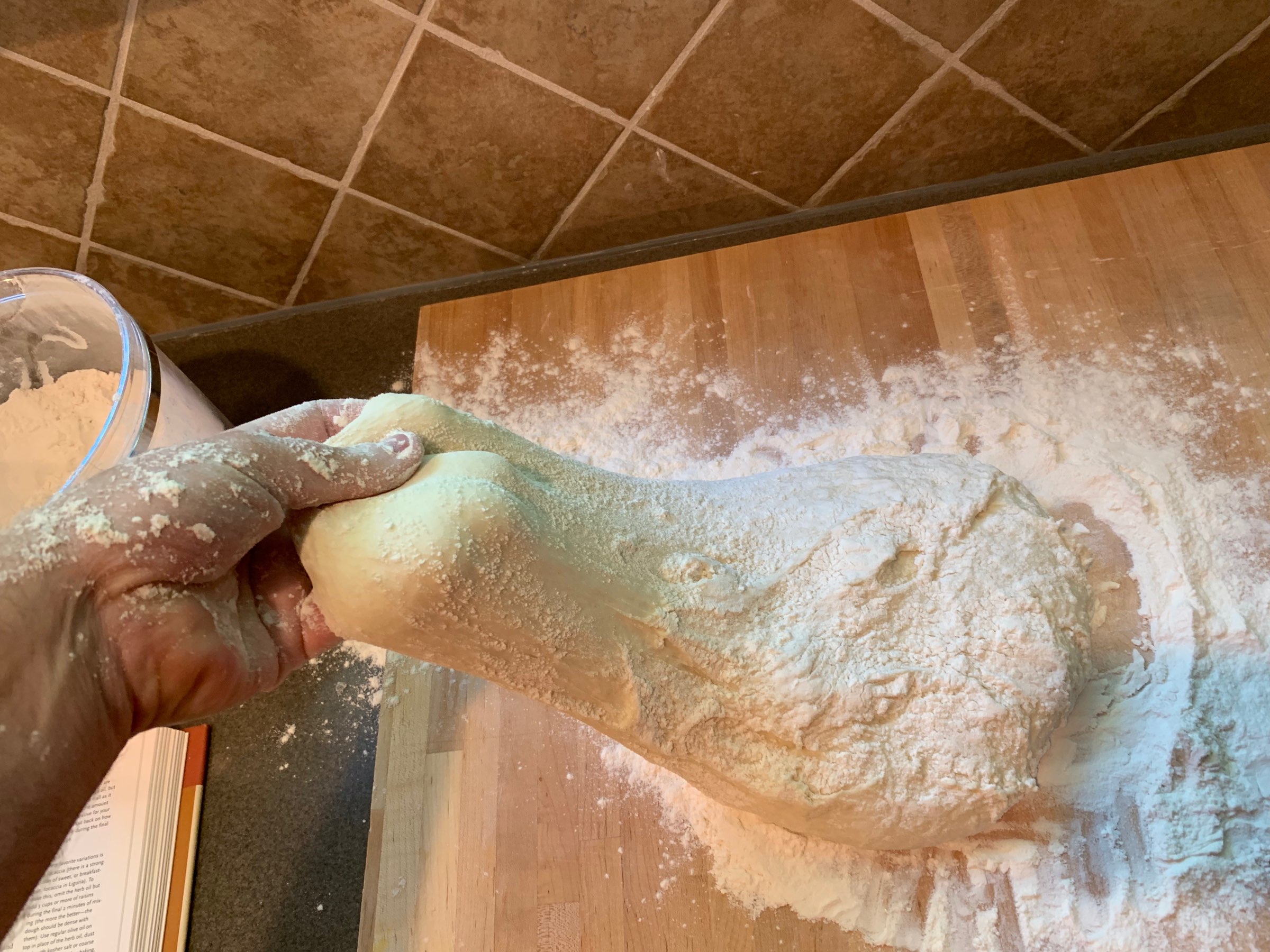
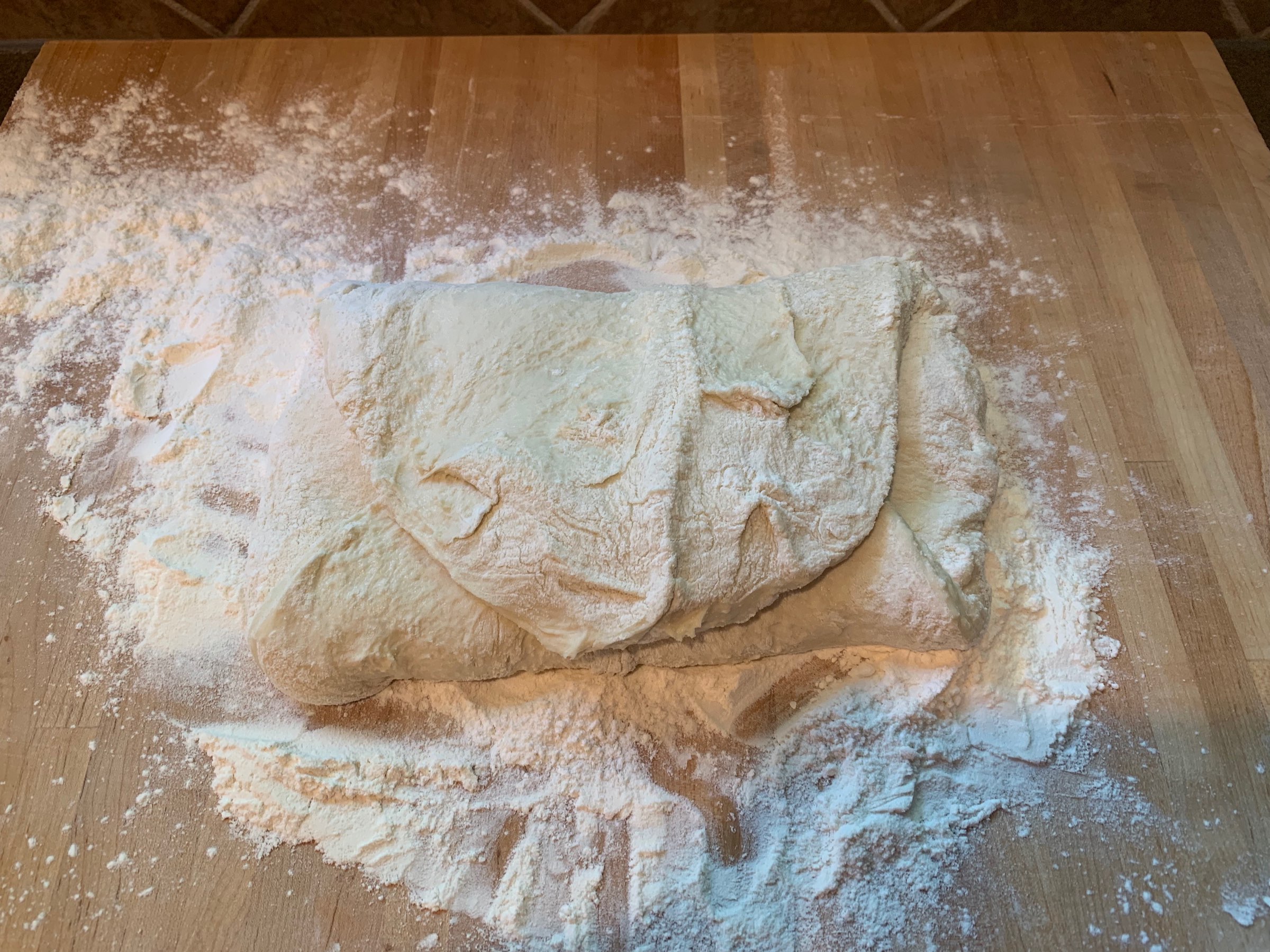
Most doughs at this point would be ready for some good old fashioned kneading. But focaccia dough is so wet and sticky that I’d just end up with dough up to my elbows if I tried. So instead of kneading, this dough is stretched and folded to develop gluten.
Now a 5 minute rest in a bed of flour to allow the gluten in the dough to relax. The flour just keeps the focaccia dough from sticking to everything.
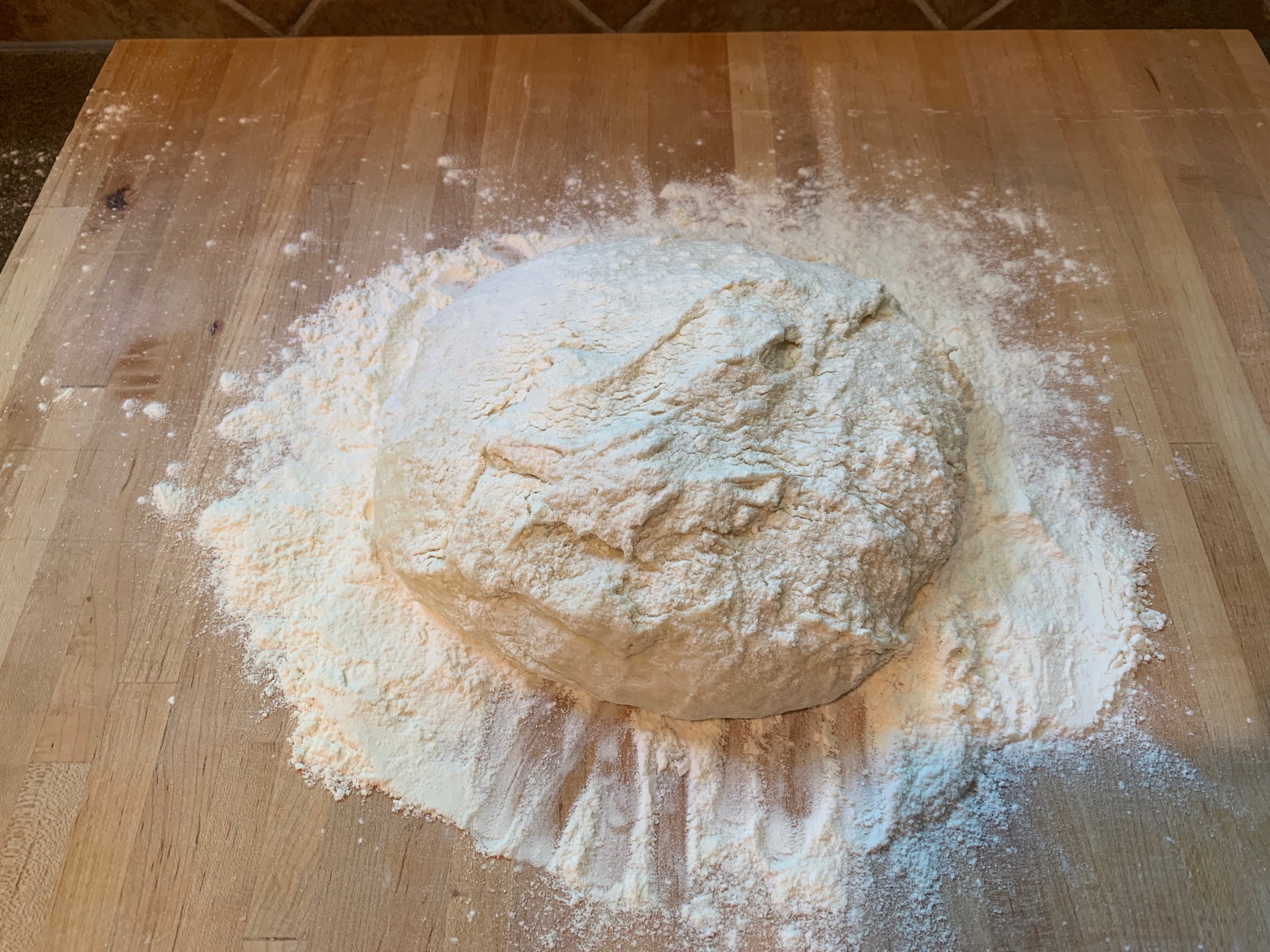
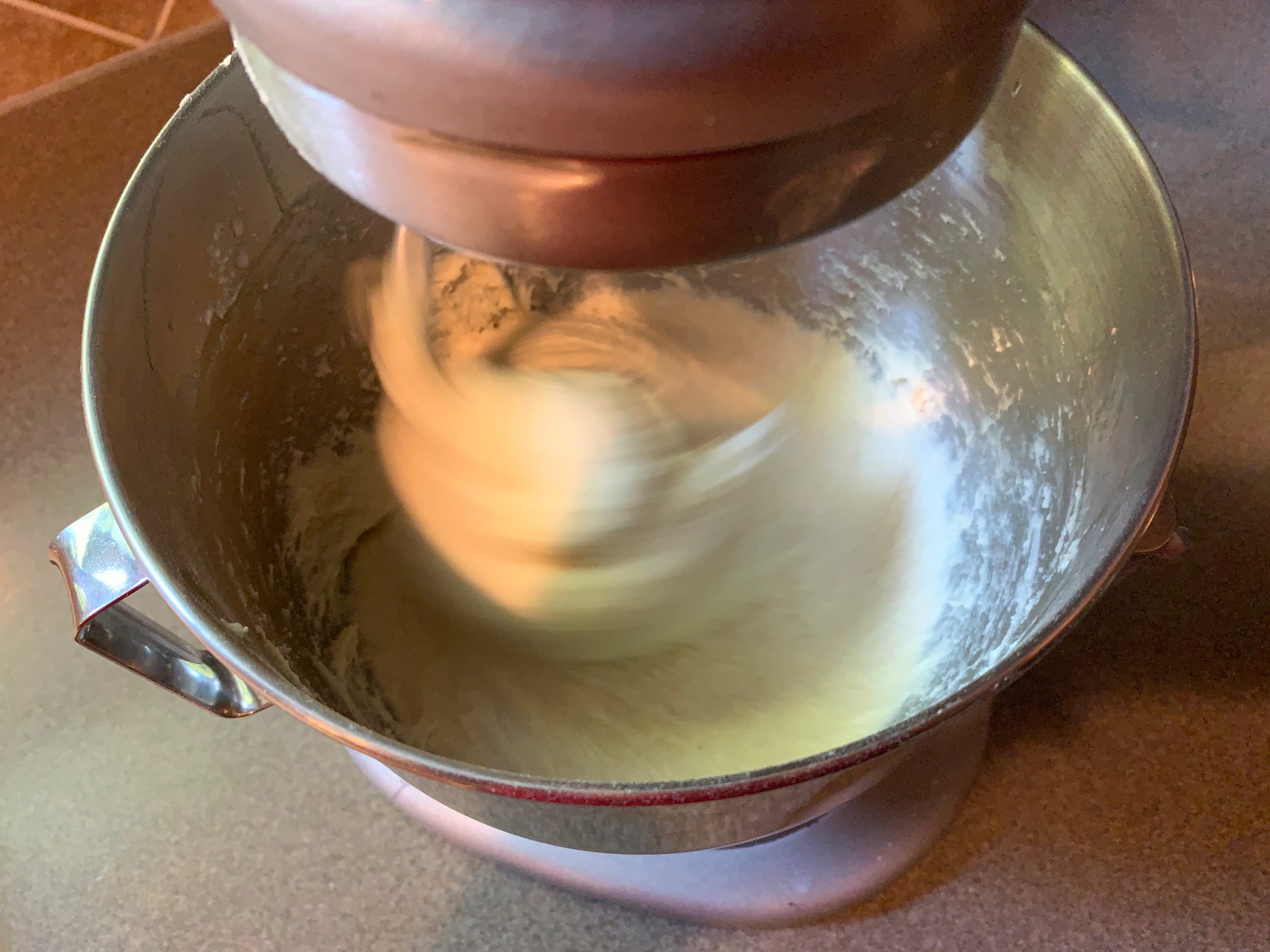
Next into the mixer for kneading.
Focaccia uses a really wet dough. It’s 7 parts water to 10 parts flour, by weight (or “70% hydration” using bread lingo). The result is a loose dough that doesn’t really form into a ball like many other, dryer doughs meant for loaf bread.
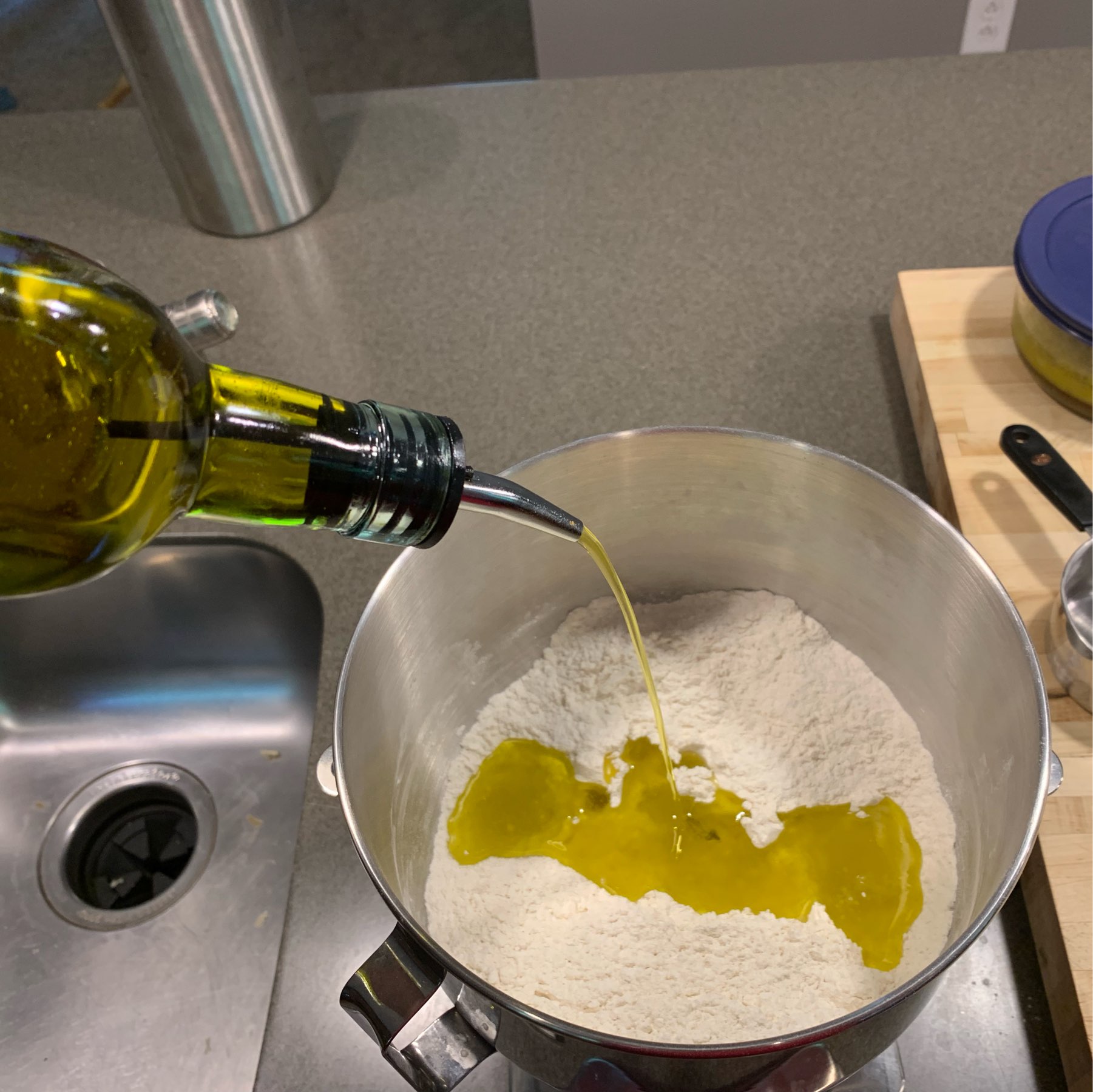
Next the olive oil and water. (Don’t worry. The oil was weighed. I didn’t just eyeball it.) #focaccia
So what do you do when you have leftover herb oil from making focaccia? Make more focaccia!
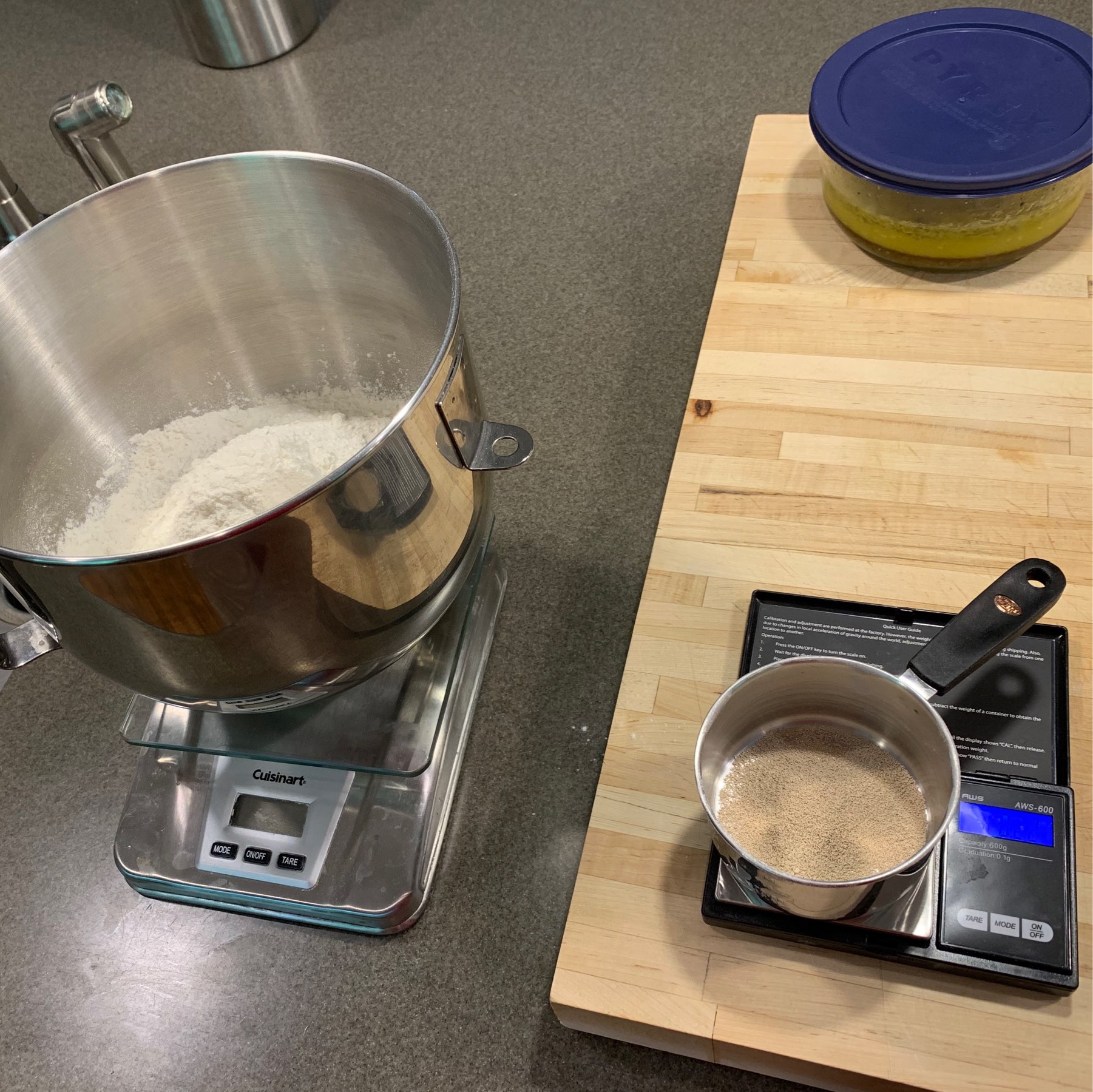
Step1: Weigh the dry ingredients and mix them.